No. 01 · Lucky Creatures
Maneki-neko, the beckoning cat
- Kanji
- 招き猫
- Reading
- まねきねこ · maneki-neko
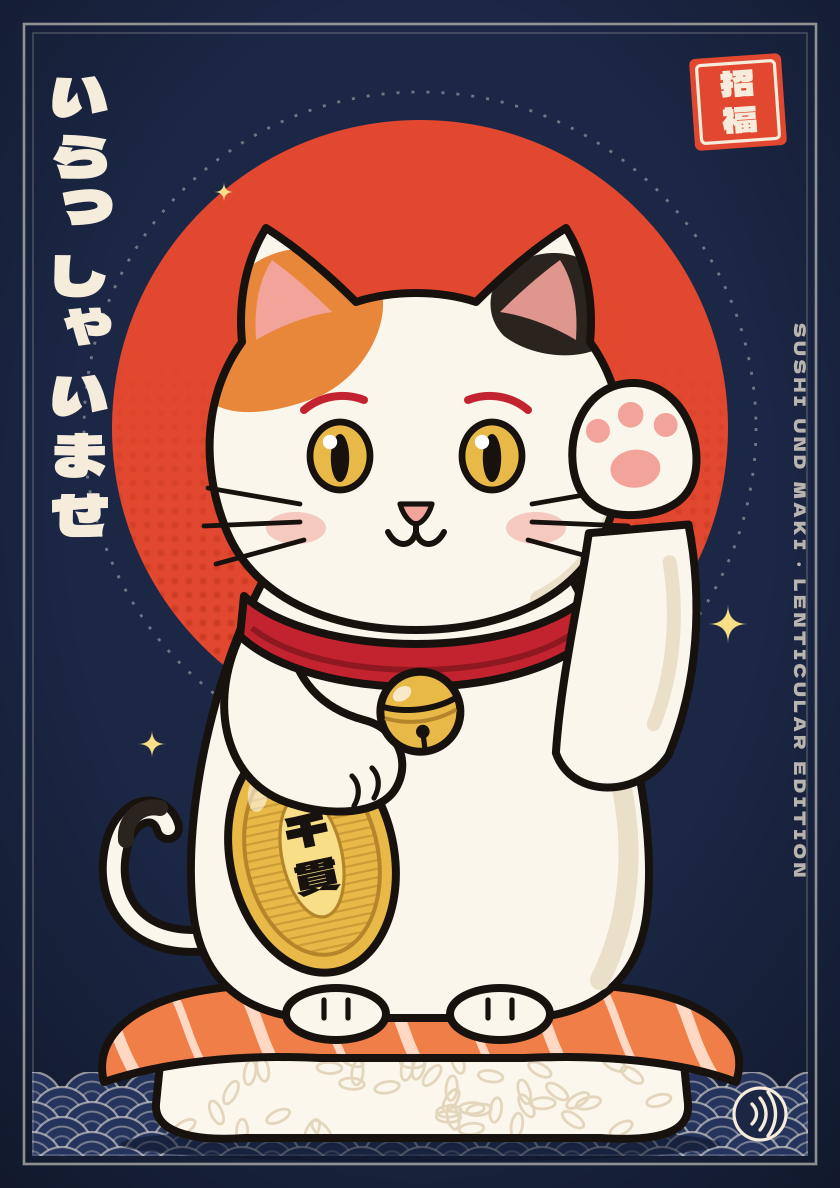
The cat with the raised paw sits in shop windows and restaurants all over Japan. It isn’t waving goodbye: in Japan you beckon someone closer with the palm facing out — so the cat is inviting you in.
To the poster — €64What it means
Maneki means “beckoning”, neko means “cat”. A raised left paw invites customers and guests; a raised right paw invites money. That’s why restaurants and shops usually choose the left one — and why some cats raise both.
The best-known origin story comes from Gōtoku-ji temple in Tokyo: in the Edo period, a temple cat beckoned a passing lord inside, just before lightning struck where he had been standing. The grateful lord became the temple’s patron. Several other places in Japan tell their own version.
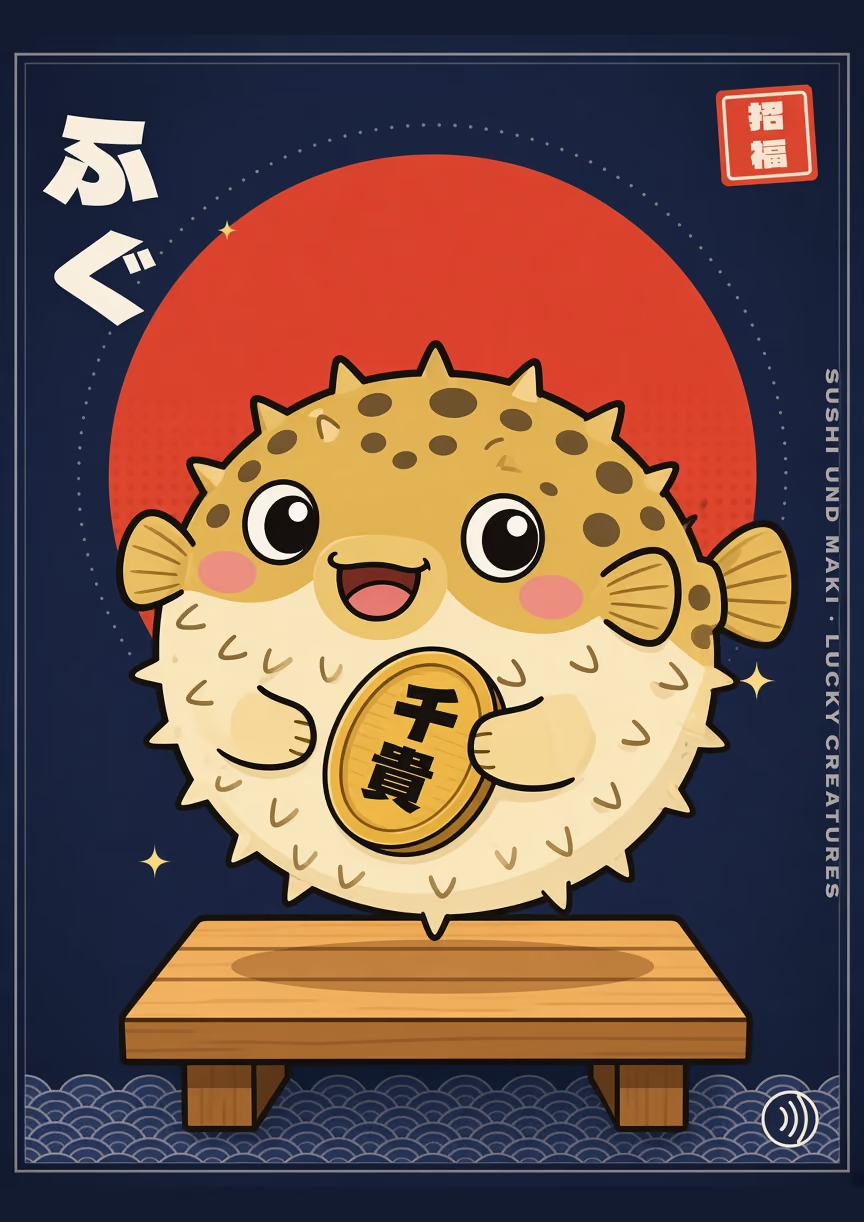
The cat usually holds a koban, an old gold coin. Ours is stamped 千貫 (sen-kan): kan is also the counter for pieces of nigiri, so it reads “a thousand pieces of sushi”.
At the sushi counter
Walk into almost any sushi bar in Japan and a Maneki-neko is somewhere near the till, often next to the register or above the entrance. It’s the restaurateur’s quiet wish for a full house.
Good to know
- Calico (mike-neko) cats are considered the luckiest of all.
- The higher the paw, the further the cat’s invitation is said to reach.
- Tokoname and Seto are the traditional pottery towns for ceramic Maneki-neko.