No. 08 · Lucky Creatures
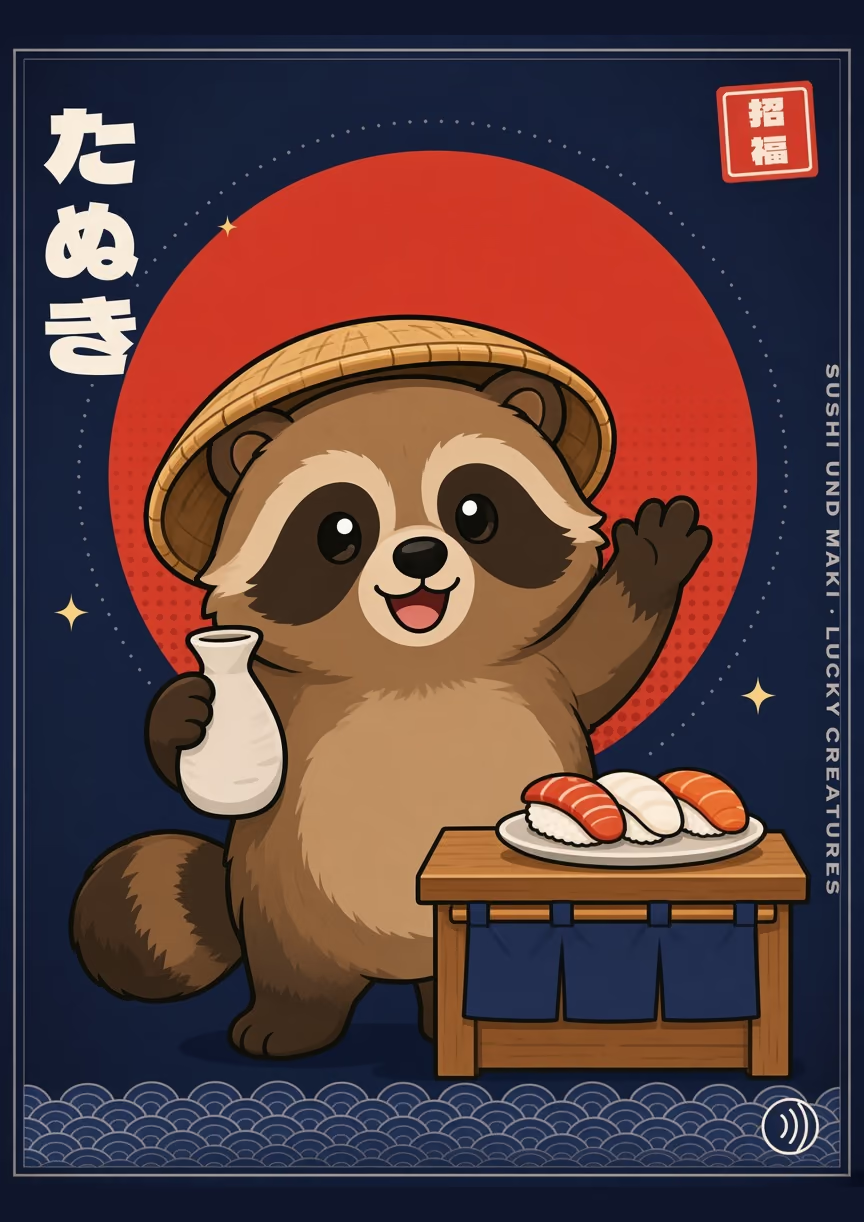
Tanuki, the raccoon dog
- Kanji
- 狸
- Reading
- たぬき · tanuki
Outside countless Japanese restaurants and bars stands a round, grinning figure with a straw hat. That’s the tanuki.
What it means
The ceramic tanuki from Shigaraki carries eight lucky signs: a hat against trouble, big eyes for good judgement, a sake flask for virtue, a ledger for trust, a big belly for calm decisions, a tail for a strong finish, a friendly face — and a money bag for fortune.
His name gets a pun too: ta-nuki can be read as 他抜き, “leaving the others behind” — a wish to outdo the competition.
In folklore he’s a jolly trickster who shapeshifts and plays pranks, more mischief than menace.
At the sushi counter
No tanuki on the menu. But tanuki soba and tanuki udon exist: noodles topped with tenkasu, crunchy bits of tempura batter. The name is often traced to tane-nuki, “without the filling” — tempura with the shrimp left out.
Good to know
- Tanuki are real animals, raccoon dogs, native to East Asia.
- Shigaraki, near Kyoto, produces most of the ceramic tanuki statues.
- Studio Ghibli’s Pom Poko tells the story of tanuki defending their forest.