No. 10 · Lucky Creatures
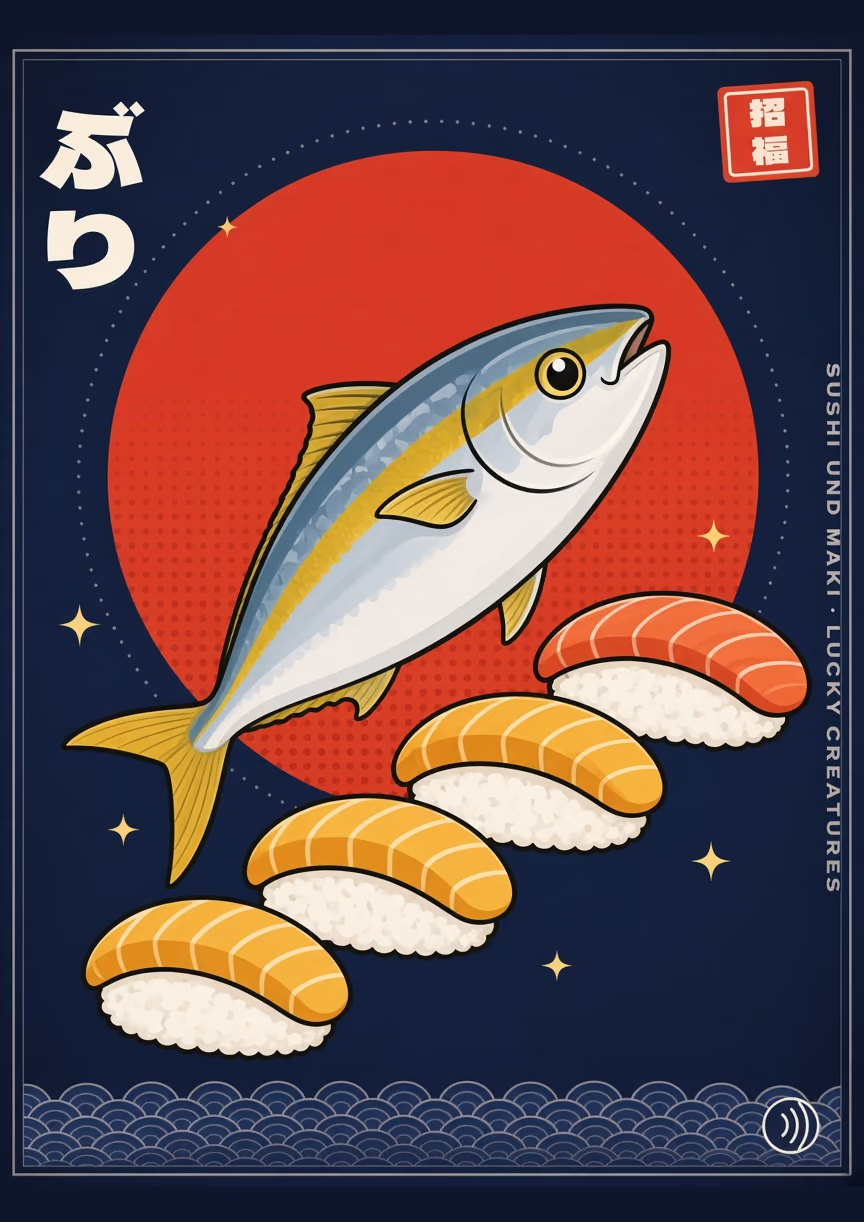
Buri, the yellowtail
- Kanji
- 鰤
- Reading
- ぶり · buri
Few fish have a career like this one — it changes its name as it grows.
What it means
Buri is a shusse-uo, a “promotion fish”: in the Kanto region the young fish is called wakashi, then inada, then warasa, and only the full-grown fish is buri. In Kansai the names run tsubasu, hamachi, mejiro, buri.
Because of this, eating buri is a wish for promotion and success, and it’s a classic at New Year in western Japan.
In Toyama, a bride’s family traditionally sends a whole buri to the groom’s family in the first winter after the wedding.
At the sushi counter
Hamachi and buri nigiri are rich, buttery and slightly sweet. Winter yellowtail, kanburi, from the Sea of Japan is the most prized. Buri daikon, simmered with radish, is the home-cooking classic.
Good to know
- Outside Japan, “hamachi” usually means farmed yellowtail.
- Himi in Toyama is famous for its winter buri.
- Kanpachi (amberjack) is a close relative, often confused with it.